

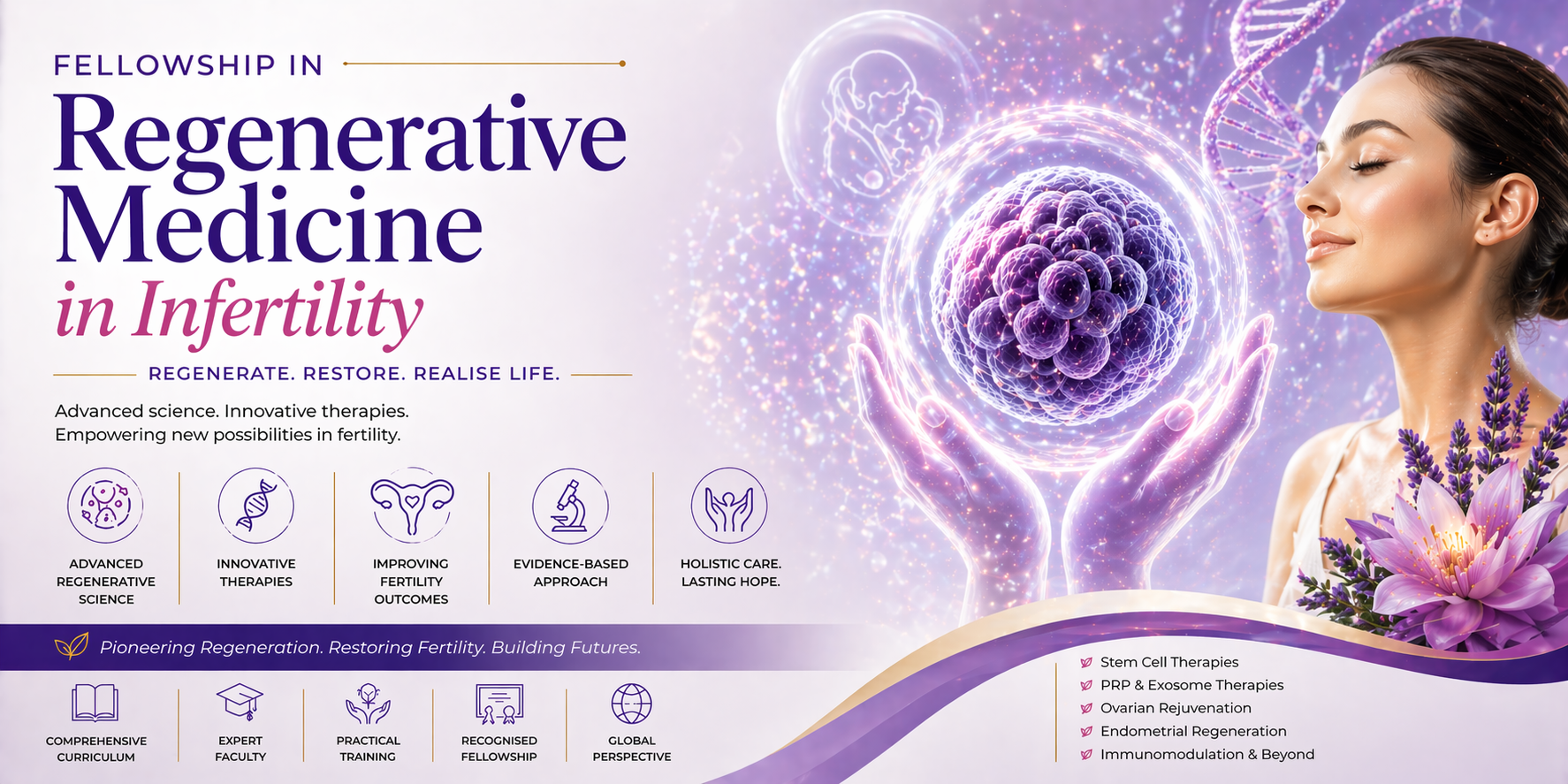
Stem Cell Course for Doctors in India: How to Choose a Regenerative Medicine Fellowship (2027)
- Regenerative medicine training should cover biology, biologics, regulation and clinical tracks.
- In India, stem cell therapy is regulated — training must teach what is approved, what is research and what is not permitted.
- Compare PRP, BMAC, SVF and exosomes by evidence, not by marketing.
- IASRM’s Fellowship in Stem Cell & Regenerative Medicine has 17 modules, 15 clinical tracks and 16 hands-on days in New Delhi.
Doctors across orthopaedics, gynaecology, dermatology, pain medicine and internal medicine are asking how to train in stem cell and regenerative medicine. The field moves fast and is closely regulated, so the choice of course matters. This guide sets out what a stem cell course for doctors in India should include.
What should a regenerative medicine course teach?
- Stem cell biology: mesenchymal stromal cells, haematopoietic stem cells, iPSCs and the regenerative niche
- Biologics: platelet-rich plasma (PRP) and PRF, bone marrow aspirate concentrate (BMAC), adipose-derived SVF and nanofat, exosomes and secretomes
- Manufacturing and safety: cell processing, GMP, quality control and immunology
- Regulation: the framework in India (ICMR, CDSCO, NMC) and internationally
- Clinical tracks: applying the science to your specialty, with the evidence grade of each indication
Why regulation is part of the curriculum
In India, stem cell therapies outside approved indications and approved clinical trials are not permitted. A responsible course teaches doctors to distinguish approved practice, clinical research and what is not allowed — and to explain this honestly to patients.
PRP, BMAC, SVF or exosomes?
Each biologic has a different rationale, preparation method and evidence base. PRP has the broadest clinical literature; BMAC and SVF involve more complex processing; exosome products vary widely in characterisation. A good course compares them side by side rather than promoting one.
The IASRM Fellowship in Stem Cell & Regenerative Medicine
The IASRM fellowship is a 12-month hybrid programme with 17 modules and 15 specialty tracks, live online lectures (with an evening batch for Asia, the Middle East and Europe and a morning batch for the Americas), 16 days of hands-on training at Sunrise Hospital, New Delhi, one-to-one mentorship and a research paper. IASRM has run regenerative and longevity medicine congresses since 2014 and has trained and connected more than 3,000 doctors, researchers and academicians.
Fees and next batch
Each IASRM fellowship costs ₹4,50,000 + 18% GST for fellows in India or USD 5,500 for fellows outside India. Intakes run every February and August; the February 2027 batch is now enrolling. See fees, eligibility and admissions, or WhatsApp +91 98104 18415.
IASRM fellowships are educational training programmes. They are not recognised by the National Medical Commission and do not confer any additional registration, qualification or right to practise.