

Cosmetic Gynaecology Course in India: How to Train in Aesthetic & Functional Gynaecology (2027 Guide)
- A cosmetic gynaecology course should cover functional conditions (GSM, laxity, incontinence), not just aesthetics.
- Look for anatomy and assessment first, then regenerative therapies, devices and surgery.
- A one-year fellowship adds mentorship and publication to hands-on training.
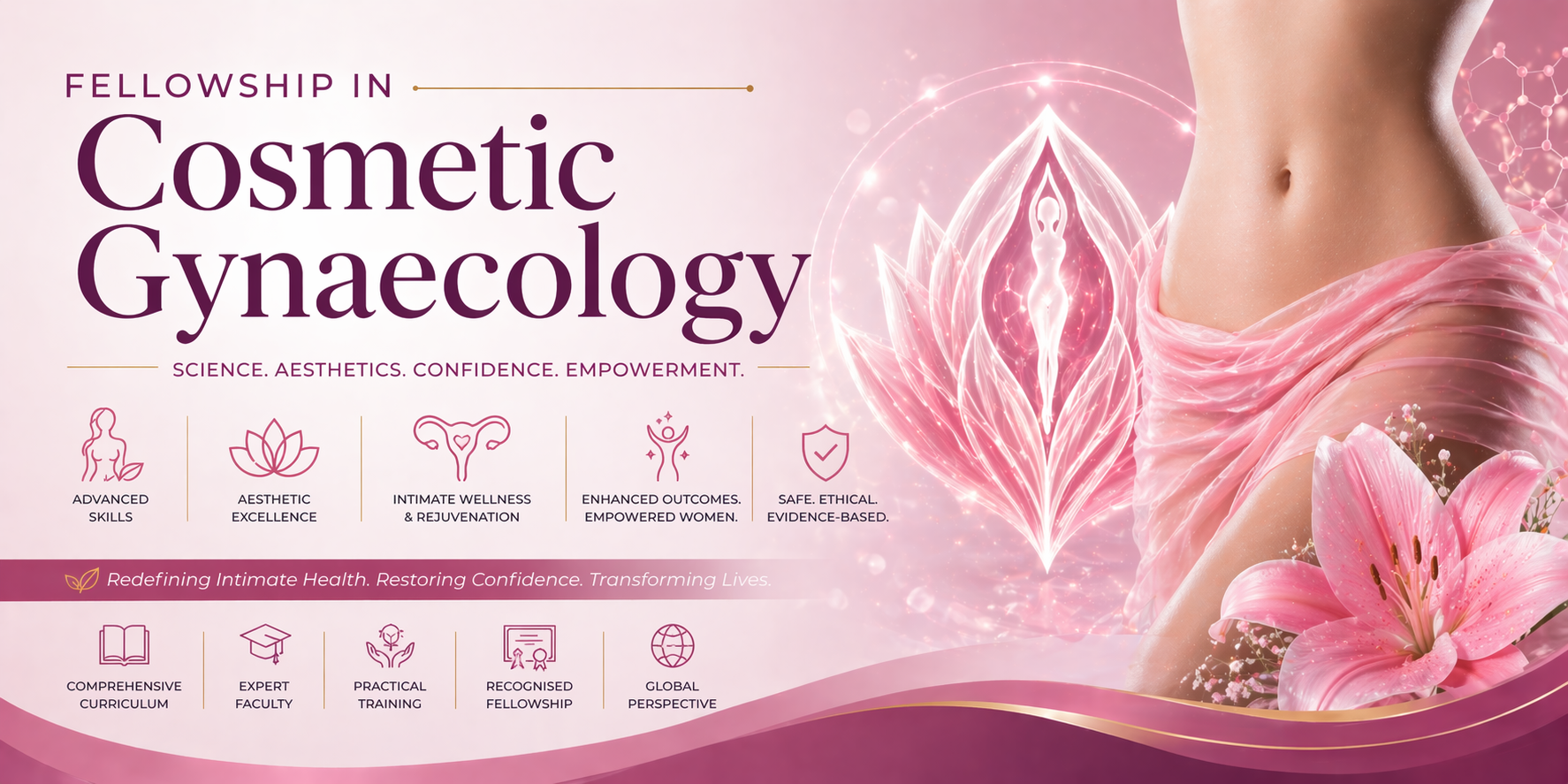
- IASRM’s Fellowship in Functional, Regenerative & Aesthetic Gynaecology runs for 12 months with 16 hands-on days in New Delhi.
Cosmetic gynaecology — now more often called aesthetic, functional and regenerative gynaecology — has grown from a handful of procedures into a full clinical field. Women ask their gynaecologist about vaginal laxity after childbirth, genitourinary syndrome of menopause (GSM), stress urinary incontinence, lichen sclerosus, sexual health and labial appearance. This guide explains what a good cosmetic gynaecology course in India should teach, and how to choose between a short course and a fellowship.
What does a cosmetic gynaecology course cover?
A complete programme covers five areas: (1) vulvovaginal and pelvic-floor anatomy with validated assessment tools; (2) functional conditions such as GSM, laxity, stress urinary incontinence and vulvar dermatoses; (3) regenerative therapies — PRP, fat grafting, nanofat and SVF — with their evidence and limits; (4) energy-based devices including CO2 and Er:YAG lasers, radiofrequency and HIFU; and (5) non-surgical and surgical aesthetic procedures such as fillers, labiaplasty, clitoral hood reduction and perineoplasty, with consent and complication management.
Short course or fellowship?
One- or two-day courses usually introduce a device or a procedure. A fellowship takes a year: it teaches the sequence that keeps patients safe — anatomy and assessment before therapy, therapy before technology, technology before surgery — and adds supervised practical training, a personal mentor and a research paper. For gynaecologists who want to build a service rather than add a single procedure, a fellowship is the stronger foundation.
What to look for when choosing a programme
- Evidence grades stated for every therapy, and device-neutral teaching
- Functional and sexual medicine included, not only aesthetics
- Hands-on training in an accredited hospital setting
- International faculty and a scientific network
- Clear statements about recognition — training programmes do not confer a licence
The IASRM Fellowship in Functional, Regenerative & Aesthetic Gynaecology
The IASRM fellowship (formerly the Fellowship in Cosmetic Gynaecology) is a 12-month hybrid programme with 11 modules, live online lectures, 16 days of hands-on training in four 4-day blocks at Sunrise Hospital, New Delhi (attend at least one block), one-to-one mentorship and a research paper. Faculty include IASRM Scientific Chairman Dr Red M Alinsod (USA), and the programme teaches IASRM signature protocols such as O-Cell®, hd-PRP Intimashot® and SVF-Adipocell®. Scientific collaborations with SOLAGEF (Latin America) and PSRM (Philippines) add international faculty and cases.
Fees and next batch
Each IASRM fellowship costs ₹4,50,000 + 18% GST for fellows in India or USD 5,500 for fellows outside India. Intakes run every February and August; the February 2027 batch is now enrolling. See fees, eligibility and admissions, or WhatsApp +91 98104 18415.
IASRM fellowships are educational training programmes. They are not recognised by the National Medical Commission and do not confer any additional registration, qualification or right to practise.